DELL KCD9Y Chassis Riser R3B 2X8
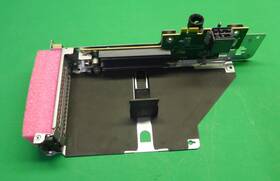
( Brand: Dell ), ( Manufacturer Part Number: KCD9Y ), ( Type: Riser 3 )
Review DELL New R3b Chassis 2x8 Riser
The **Dell KCD9Y R3B Chassis with 2x8 Riser** is a high-performance, enterprise-grade server chassis designed to deliver unparalleled flexibility, scalability, and reliability for demanding computing environments. Engineered with Dell s signature precision and durability, this chassis is built to accommodate a wide range of advanced server configurations, making it an ideal choice for data centers, cloud infrastructure, and high-density computing workloads. The **R3B model** features a robust, modular design that supports up to **two 8-lane PCIe riser cards**, each capable of hosting multiple expansion cards, including high-speed GPUs, accelerators, or network adapters. This configuration maximizes connectivity options while maintaining a compact footprint, allowing for efficient cable management and airflow optimization critical factors in maintaining thermal stability in high-density deployments.
At its core, the **KCD9Y chassis** is constructed from high-quality materials, including reinforced steel and corrosion-resistant coatings, ensuring long-term durability and resistance to environmental stressors. The chassis incorporates **Dell s advanced cooling architecture**, featuring strategically placed fans and airflow channels that promote optimal heat dissipation, even when operating under heavy computational loads. The **2x8 riser cards** themselves are engineered to provide low-latency, high-bandwidth connectivity, leveraging **PCIe 3.0 or higher** standards to support next-generation hardware without compromising performance. Whether deploying **NVIDIA Tesla GPUs for AI/ML workloads, high-speed InfiniBand adapters for HPC clusters, or enterprise-grade network cards for virtualized environments**, this riser configuration ensures seamless integration and future-proof scalability.
Beyond its technical capabilities, the **KCD9Y R3B chassis** is designed with ease of service in mind. The **hot-swappable riser cards** allow for quick upgrades or replacements without disrupting system operations, reducing downtime and maintenance overhead. The chassis also supports **Dell s iDRAC (Integrated Dell Remote Access Controller)**, enabling remote monitoring, diagnostics, and management essential features for IT administrators overseeing large-scale server deployments. Additionally, the **modular expansion slots** accommodate a variety of form factors, including **full-height, half-height, and low-profile cards**, ensuring compatibility with a broad spectrum of peripherals and storage solutions. Whether deployed in a traditional rack environment or as part of a **Dell PowerEdge server stack**, this chassis delivers a balance of performance, efficiency, and adaptability, making it a cornerstone for modern data infrastructure.
### Pros and Cons of buying a Dell KCD9Y (R3B) Chassis with a 2x8 Riser
#### **Pros:**1. **Scalability and Flexibility** The KCD9Y chassis is designed for high-density server deployments, supporting up to 9U of hardware (depending on configuration). The inclusion of a 2x8 riser allows for additional expansion slots, which can be useful for adding GPUs, network cards, or other high-performance components. This is particularly beneficial for workloads requiring parallel processing or high I/O throughput.
2. **Compatibility with Dell PowerEdge Servers** This chassis is part of Dell s PowerEdge lineup, which is known for reliability, enterprise-grade support, and compatibility with a wide range of Dell and third-party components. The R3B revision may include minor updates or fixes compared to earlier versions, ensuring better long-term support.
3. **Hot-Swappable and Redundant Design** The chassis supports hot-swappable drives and power supplies, reducing downtime during maintenance. Redundant power supplies (if configured) enhance uptime in critical environments. The 2x8 riser can also accommodate additional PCIe cards, which may include redundant network interfaces or storage controllers.
4. **Enterprise-Grade Build Quality** Dell s chassis are built to withstand demanding data center environments, with features like proper airflow management, EMI shielding, and robust mounting solutions. This ensures longevity and reliability in high-stress environments.
5. **Support for High-Performance Components** The 2x8 riser can host GPUs, FPGAs, or other high-bandwidth cards, making this chassis suitable for AI/ML workloads, virtualization, or high-performance computing (HPC). Dell s PowerEdge servers are often used in such scenarios due to their ability to handle demanding hardware.
6. **Dell s Support and Warranty** Purchasing from Dell comes with access to technical support, firmware updates, and warranty coverage. This can be crucial for enterprises relying on mission-critical infrastructure. The R3B revision may also benefit from newer support packages.
7. **Modularity** The chassis can be configured with varying numbers of drives (SAS/SATA/SSD/NVMe) and processors, allowing for customization based on specific needs. The 2x8 riser adds another layer of modularity for expansion needs.
8. **Future-Proofing** Dell s chassis designs often align with industry standards, ensuring compatibility with upcoming hardware. The R3B revision may include improvements that extend the lifespan of the chassis, making it a long-term investment.
---
#### **Cons:**1. **Cost** Dell s enterprise-grade chassis and servers are typically more expensive than consumer-grade alternatives. The KCD9Y chassis itself, combined with a 2x8 riser and compatible servers, can represent a significant upfront investment. Additional costs may include licensing, support contracts, and optional redundancy features.
2. **Overkill for Small-Scale Use** If you only need basic server functionality (e.g., a single server with minimal expansion needs), the KCD9Y chassis may be unnecessarily complex or expensive. Smaller rack-mounted servers or blade systems might suffice for simpler deployments.
3. **Complexity in Setup and Maintenance** The KCD9Y chassis requires careful planning for cable management, airflow, and component placement. Managing a 2x8 riser with additional PCIe cards can introduce complexity in terms of power distribution, cooling, and potential bottlenecks. Enterprises with limited IT staff may find this challenging.
4. **Power and Cooling Requirements** High-density configurations (especially with GPUs or multiple high-performance cards) can generate significant heat and power consumption. The chassis must be paired with adequate cooling (e.g., CRAC units, fans, or liquid cooling) and power infrastructure (PDUs, UPS systems) to avoid overheating or power fluctuations.
5. **Vendor Lock-In** Dell s ecosystem, while robust, can create vendor lock-in. Migrating to other hardware vendors later may require additional costs for compatibility testing or retraining. This is less of an issue if you re already committed to Dell s ecosystem.
6. **Potential for Obsolescence** While Dell s hardware is designed for longevity, newer revisions (e.g., R4B) may introduce compatibility issues with older components. If you re not planning to upgrade soon, ensure that the R3B revision supports your intended hardware for the duration of its use.
7. **Physical Space and Rack Constraints** The KCD9Y chassis occupies a full 9U rack space, which may not be ideal for environments with limited rack capacity. If you re consolidating multiple servers, this could limit your options for future scaling.
8. **Licensing and Software Costs** Depending on the use case, additional licensing (e.g., for virtualization software, OS, or security tools) may be required. These costs can add up, especially in enterprise environments.
---
### **Conclusion:**The Dell KCD9Y (R3B) chassis with a 2x8 riser is an excellent choice for **enterprise environments, high-performance computing, AI/ML workloads, or data centers requiring scalability, redundancy, and support for high-bandwidth expansion cards**. Its strengths lie in reliability, compatibility with Dell s ecosystem, and the ability to handle demanding hardware configurations. However, it is **not ideal for small-scale or budget-conscious deployments**, as the cost, complexity, and power requirements may outweigh the benefits.
If your use case involves:- **High-density server deployments** (e.g., virtualization, HPC, or GPU acceleration),
- **Mission-critical infrastructure** where uptime and support are priorities,
- **Future-proofing** with Dell s enterprise-grade hardware,
then this chassis is a strong recommendation.
If, on the other hand, you need:- A **simple, cost-effective solution** for basic server needs,
- **Minimal expansion requirements** (e.g., no GPUs or high-I/O cards),
- **Flexibility to mix vendors** without lock-in,
then consider alternatives like smaller rack servers, blade systems, or open-frame chassis from other vendors.
### **Final Recommendation:** **Buy the Dell KCD9Y (R3B) chassis with a 2x8 riser if:**- You are running an enterprise environment where reliability, support, and scalability are non-negotiable.
- Your workloads require high-performance expansion (e.g., GPUs, FPGAs, or multiple network cards).
- You are already invested in Dell s ecosystem and can justify the cost and complexity.
**Avoid it if:**- Your needs are basic and a simpler, lower-cost solution would suffice.
- You lack the expertise or infrastructure to manage a high-density, high-power server setup.
- You prioritize vendor flexibility over Dell s proprietary ecosystem.
For most **enterprise or high-performance use cases**, the Dell KCD9Y (R3B) chassis with a 2x8 riser is a **solid, well-supported investment**. For smaller or more cost-sensitive deployments, weigh the pros and cons carefully against alternatives.
Details:
Dell R3B Chassis 2x8 Riser 3.
part #: kcd9y prices
- $134.99-$149.00
specifications rackmountcasee:
- brand: Dell
- mpn: Kcd9y
- type: Riser 3
general rackmountcasee:
- Enterprise Networking, Servers > Racks, Chassis Patch Panels > Rackmount Cases Chassis
- condition: Open box
offer rackmountcasee:
- availability: In Stock
- sold: 0
- started: February 17, 2026
- options: Ship-to-home
- best offers: True
- quantity: 5
seller rackmountcasee:
- city: Marlin, Texas
- rating: 99.9%
- # reviews: 39655
returns rackmountcasee:
- paid by: Seller
- policy: Returns Accepted
- method: Money back
- time: 30 Days
payments rackmountcasee:
- other
- credit card: Discover
- wallet: Google-pay
shipping rackmountcasee:
- service: Standard
- type: Fixed
- class: Standard
- cost: $0.00
- transit: 3-7 Days
Dell KCD9Y Is Similar To:
- .calgarycomputerwholesale Calgarycomputerwholesale New Dell 1u Cable (20.8% similar) I'll get back to you as soon I can. Condition: new. Comes as shown...(June 1st, 2017)
- 0.1917639224258807 0.0691899902855706 New Dell Poweredge (19.1% similar) I'll get back to you as soon I can. Condition: new if a power adapter is required for this item, it not included cord no other accessories hardware software...(February 6th, 2018)
- 0.24877805462044233 0.5715514380402451 New Dell 1u (18.2% similar) If a power adapter is required for this item, it not included cord no other accessories hardware software. I'll get back to you as soon I can. Condition: new other, in the open box...(January 19th, 2018)
- 0.4067234172908063 New Dell Cable Management Arm Kit (24.4% similar) Condition: new if a power adapter is required for this item, it not included cord no other accessories hardware software. I'll get back to you as soon I can...(June 25th, 2018)
- 0.5405543425796218 New Dell Cable Management Arm Kit (24.4% similar) I'll get back to you as soon I can. Condition: new if a power adapter is required for this item, it not included cord no other accessories hardware software...(August 15th, 2018)
- 0.7831570591211516 New Dell Cable Management Arm Kit Qty (23.4% similar) I'll get back to you as soon I can. If a power adapter is required for this item, it not included cord no other accessories hardware software. Condition: new other, in open box...(August 15th, 2018)
- 0.8569211735297646 New Dell Cable Management Arm Kit Unit (23.2% similar) Condition: new other, in open box. If a power adapter is required for this item, it not included cord no other accessories hardware software. I'll get back to you as soon I can...(September 27th, 2018)
- 0.8791468775637816 0.44210655461105275 New Dell R620 (17.8% similar) Condition: new other, in the open box. I'll get back to you as soon I can. If a power adapter is required for this item, it not included cord no other accessories hardware software...(January 18th, 2018)
- 02cgtg Dell New 2u Threaded (36.9% similar) Adapter brackets can be installed in a threaded hole rack to support ready rails sliding rail kits. They can also be used with the Dell rack-mount ups ready rails static rail kit. Items sold with a 14 day right of return. This sale is for a new Dell 02CGTG 2u threaded hole rack adapter kit sliding ...(June 7th, 2017)
- 035don Dell New Mccave Management (33.8% similar) Our address for pickup is sum computers inc. No checks or escrow. New Dell Mojave management arm kit 035DON power edge R715 R810 R910 free ship...(January 22nd, 2018)
- 06cjrh New Dell Md1200 Md1220 (23.9% similar) Functional notes: guaranteed...(October 27th, 2017)