SUPERMICRO E5-2630L Intel 4U V3 512GB DDR4 10G 2P X520
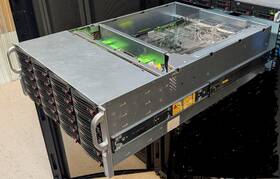
( Brand: Supermicro ), ( Manufacturer Part Number: E5-2630L ), ( Model: E5-2630L V3 ), ( Form Factor: Rack Mountable ), ( Type: Server ), ( Processor Manufacturer: Intel ), ( Ram Size: 512 Gb ), ( Memory Type: Ddr4 Sdram ), ( Processor Speed: 1.8 Ghz )
Review SUPERMICRO 4u V3 512gb Ddr4 Intel 10g 2p
The **Supermicro E5-2630L 4U Server (SY-5028FR-TR) with 512GB DDR4 ECC RAM, Dual Intel Xeon E5-2630L v3 Processors, 10Gbps Networking via Dual Intel X520-T2 Dual Port Adapters, and a robust 2U/4U hybrid chassis** represents a high-performance, enterprise-grade computing solution engineered for demanding workloads such as virtualization, database management, software-defined networking, and high-availability data centers. Built upon the proven architecture of Intel s sixth-generation Xeon E5-2600 v3 processors, this server delivers a balanced blend of efficiency and power, featuring two **Intel Xeon E5-2630L v3 (2.4GHz base, up to 3.7GHz with Turbo Boost, 8 cores per CPU, 16 cores total, 20MB L3 cache)** processors that excel in multi-threaded applications while maintaining low power consumption ideal for environments where thermal and energy management are critical. The **4U hybrid chassis** offers exceptional flexibility, accommodating up to **12 hot-swappable 3.5" or 2.5" SAS/SATA drives** in a **12-bay configuration**, along with **240GB of onboard cache** via a **Supermicro M12i-DPE RAID-on-chip controller**, ensuring rapid data access and redundancy for mission-critical operations. The server is further equipped with **512GB of registered DDR4 ECC memory (16x 32GB DIMMs, 2133MHz)**, providing ample headroom for memory-intensive tasks such as large-scale virtualization (e.g., VMware ESXi or Microsoft Hyper-V) or high-performance databases (e.g., Oracle, SQL Server). This memory configuration ensures minimal latency and optimal data throughput, reducing bottlenecks in CPU-bound or memory-heavy workloads.
Networking performance is a standout feature of this system, thanks to the inclusion of **dual Intel X520-T2 10Gbps Ethernet adapters**, which deliver **low-latency, high-bandwidth connectivity** via **SFP ports**, enabling seamless integration into modern data center infrastructures. These adapters support advanced features such as **VXLAN, RDMA over Converged Ethernet (RoCE), and iWARP**, making them well-suited for software-defined networking (SDN) environments, cloud computing, and high-speed data analytics. The server s **dual-processor architecture** and **low-power design** (with a **TDP of 85W per CPU**) ensure energy efficiency without compromising performance, aligning with sustainability goals while maintaining peak operational reliability. Additionally, the **4U/2U hybrid form factor** allows for easy integration into existing rack environments, offering the option to deploy it as a **2U server** (with drive bays removed) for space-constrained deployments or as a **4U configuration** for expanded storage capacity. Security and redundancy are prioritized through features such as **IPMI 2.0 with virtual media support**, enabling remote management and secure firmware updates, while the **hot-swappable components** (including power supplies and fans) ensure minimal downtime during maintenance. Whether deployed as a **high-performance compute node, a virtualization host, or a dedicated database server**, this Supermicro system delivers a **scalable, future-proof platform** capable of handling the most rigorous enterprise workloads with precision and efficiency.
### **Pros and Cons of buying a Supermicro E5-2630L 4U V3 Server with 512GB DDR4 and Intel 10G X520 (2P)**
#### **Pros:**1. **High Performance for Workloads** The **Intel Xeon E5-2630L v3** (Sandy Bridge-EP) is a dual-core, hyper-threading CPU with a base clock of 2.4GHz and a turbo boost up to 3.7GHz. While not the latest, it remains capable for **moderate virtualization, database workloads, legacy applications, and low-to-mid-tier server roles** (e.g., file servers, web hosting, small-scale VMs).
2. **DDR4 Memory Support (512GB)** The **512GB of DDR4 RAM** provides ample memory for **database-heavy applications, virtualization (ESXi, Hyper-V), or large-scale in-memory processing**. This is a significant upgrade over older DDR3 systems and ensures smooth operation for memory-intensive tasks.
3. **Intel 10G X520 Dual-Port NICs** The **dual 10GbE X520 adapters** offer **high-speed networking**, which is beneficial for:- **Storage networks (iSCSI, Fibre Channel over Ethernet)**
- **High-bandwidth data transfer (backups, replication, clustering)**
- **Low-latency applications (financial trading, real-time analytics)**
This is a strong upgrade from traditional 1GbE or even 10GbE cards with lower throughput.
4. **Reliability & Build Quality** Supermicro is known for **durable, enterprise-grade hardware** with **good power efficiency, redundancy options (if configured), and long-term availability of parts**. The **4U form factor** fits well in most data centers and server racks.
5. **Cost-Effective for Legacy Workloads** If you need to **run older applications, virtualize legacy systems, or replace failing hardware**, this server provides a **balanced mix of performance and cost**. It is **cheaper than newer Xeon Scalable or AMD EPYC servers** while still offering decent performance for many use cases.
6. **Scalability (If Needed)** The **dual-socket design** allows for future upgrades (though parts may become scarce). If you later need more CPU cores, you could consider **adding a second E5-2630L v3** (though this is not recommended for most workloads due to limited scaling benefits).
7. **Low Power Consumption (Compared to Modern CPUs)** The **E5-2630L v3** is a **low-power Xeon**, consuming less electricity than newer high-TDP CPUs, which can be beneficial for **cost savings in data centers**.
---
#### **Cons:** 1. **Outdated CPU Architecture (2014-2015 Era)** The **E5-2630L v3** is based on **Sandy Bridge-EP**, which lacks:- **Modern instruction sets (AVX-512, newer AES-NI optimizations)**
- **Better power efficiency compared to newer CPUs (e.g., Xeon D-1500, AMD EPYC, or Intel Xeon Scalable)**
- **Support for newer operating systems with optimizations** (though it still runs Windows Server, Linux, and ESXi well)
2. **Limited Core & Thread Count (4C/8T)** With **only 4 physical cores and 8 threads**, this CPU is **not ideal for CPU-intensive workloads** such as:
- **High-end virtualization (many VMs with heavy CPU usage)**
- **Modern database workloads (e.g., PostgreSQL, MySQL with heavy query loads)**
- **Machine learning or AI inference (where newer GPUs/TPUs are preferred)**
- **Competitive gaming or rendering (where multi-core performance matters)**
3. **No PCIe 4.0 or NVMe Support** The **E5-2630L v3** only supports **PCIe 3.0**, limiting high-speed storage options to **SAS/SATA SSDs (not NVMe)**. If you need **fast NVMe storage**, you would need to use **PCIe 3.0 x8 slots**, which is slower than modern NVMe SSDs.
4. **Memory Bandwidth Limitations** With **only 4 DIMM slots per socket (8 total)**, the **512GB configuration uses all slots**, but the **memory bandwidth is lower than newer CPUs** (e.g., Xeon Scalable or EPYC). This can be a bottleneck for **memory-intensive applications**.
5. **Potential Scalability Issues** Since this is a **dual-socket system**, adding more CPUs is not practical. If you later need **more cores**, you would have to **upgrade to a multi-socket system (e.g., Xeon Gold/Platinum)**, which is a **significant investment**.
6. **Limited Availability of Parts** As this is an **older platform**, finding **replacement CPUs, RAM, or motherboards** may become difficult over time. Supermicro still supports it, but **long-term availability is not guaranteed**.
7. **Not Ideal for Modern Cloud or Hyperscale Workloads** If you are running **containerized workloads (Docker, Kubernetes), cloud-native apps, or AI/ML**, this server is **underpowered** compared to newer **AMD EPYC or Intel Xeon Scalable** systems with **more cores, PCIe 4.0, and better memory bandwidth**.
8. **No Integrated GPU (If Needed)** Unlike some newer Xeon D or EPYC systems, this **does not have an integrated GPU**, so if you need **headless management or GPU passthrough for VMs**, you would need to **add a separate GPU card**.
---
### **Ending Conclusion & Recommendation**
#### **Who Should Buy This Server?**
**Best for:**- **Legacy application hosting** (old ERP, custom software, or legacy databases)
- **Low-to-mid-tier virtualization** (ESXi, Hyper-V with a few VMs)
- **File & print servers** (Samba, NFS, iSCSI targets)
- **Web hosting (Apache/Nginx with moderate traffic)**
- **Database servers (MySQL, PostgreSQL with read-heavy workloads)**
- **Small-scale data analytics (if memory-bound, not CPU-bound)**
- **Budget-conscious buyers who need 10GbE networking**
#### **Who Should Avoid This Server?**
**Not ideal for:**- **High-performance computing (HPC) or scientific computing**
- **Modern cloud-native or containerized workloads (Kubernetes, Docker swarm)**
- **AI/ML inference or deep learning (needs GPUs/TPUs)**
- **CPU-intensive virtualization (many VMs with heavy workloads)**
- **Future-proofing (if you expect to upgrade in 3-5 years)**
- **Workloads requiring PCIe 4.0 or NVMe SSDs**
#### **Final Recommendation:**- **If you need a reliable, low-cost server for legacy workloads, basic virtualization, or a file/database server, this is a solid choice.**
- **If you can afford it, consider a newer system (e.g., Supermicro with Xeon D-1500, AMD EPYC, or Intel Xeon Scalable) for better long-term performance, especially if you need more cores, PCIe 4.0, or NVMe support.**
- **If 10GbE networking is critical, this is a great option just ensure your workloads are not CPU-bound.**
- **For most modern use cases (cloud, AI, high-performance VMs), a newer platform is recommended.**
**Verdict:** **Good for specific legacy or low-to-mid-tier workloads, but not future-proof for demanding applications.** If budget allows, upgrading to a newer Xeon or EPYC system may be worth it for better scalability and efficiency.
Details:
Feel free to message if any questions. Rails are included. 2 x Intel Xenon E5-2630L v3 - Total of 16C 32T 1.8GHz. This Supermicro 4U Chassis was once a JBOD that's been converted into Hypervisor.
IPMI is set to DHCP and default user/pass ADMIN/ADMIN. Buying has no reserve, winner pays shipping so please consider that into the cost. Supermicro X10DRi Motherboard.
part #: e52630l prices
- $79.00-$1299.00
specifications rackmountcasee:
- brand: Supermicro
- mpn: E5-2630l
- model: E5-2630l V3
- form factor: Rack Mountable
- type: Server
- processor manufacturer: Intel
- ram size: 512 Gb
- memory type: Ddr4 Sdram
- processor speed: 1.8 Ghz
shipping rackmountcasee:
- type: Calculated
- transit: 4-11 Days
- cost: $59.34
- class: Economy
- carrier: UPS, FedEx
- service: UPS Ground Saver, FedEx Ground Economy
payments rackmountcasee:
- other
- wallet: Paypal
- credit card: Discover
returns rackmountcasee:
- policy: Returns Accepted
- paid by: Buyer
- time: 30 Days
- method: Money back
general rackmountcasee:
- Enterprise Networking, Servers > Servers, Clients Terminals > Computer Servers
- condition: Used
seller rackmountcasee:
- city: Seattle, Washington
- rating: 100.0%
- # reviews: 134
offer rackmountcasee:
- sold: 0
- started: March 23, 2026
- availability: In Stock
- quantity: 1
- options: Ship-to-home
Supermicro E5-2630L Is Similar To:
- Cse-116tq-r700ub Intel Supermicro Superchasis 1u 672042076864 (29.8% similar) Please arrange for this before buying. On may at 20:37:43 PDT. Local pick-up is free...(July 26th, 2017)
- Cse-721 X10sba Supermicro Nas Mini Tower Intel (37.7% similar) Intel celery. 99GHZ 4GB 4x 2TB item has been tested working and is guaranteed fully functional. Item has wear from previous use including minor scuffs and scratches. Item is on hand and ready to ship...(March 22nd, 2018)
- Cse-835 Supermicro Rackmount Server Chassis Intel No Hdd (37.9% similar) The hard drives caddies have been removed therefore there is no operating system installed. Tested to power on and boot bios. Server with power cord only, no monitor, keyboard, mouse or other accessories are included...(March 22nd, 2018)
- Supermicro Sys-2028tp-hc1tr 24-bay 4-node Server Chassis Intel Xeon E5-2687w V4 (40.3% similar) The satay drives are hot-stoppable units. It shows some scratches and dings from the installation removal process. The X10DRT-P/PT/PIBF has sixteen dim slots supporting up to 1024 gb of radium or 512 radium DDR4-2133/1866/1600 MHz registered eccl memory. There are no storage drives, but there 24 ...(February 27th, 2025)
- Supermicro Cse-825-7 With Intel E5-2620v2 2.10ghz Ram 32gb No Hdd (43.2% similar) Supermicro CSE-825-7 Supermicro w/ intel E5-2620V2 2.10GHZ, ram 32GB...(May 17th, 2025)