CHASSIS PLANS / BROADCAST MICROWAVE SERVICES E30CHASSIS Bms Rugged Control Win Xp Desktop
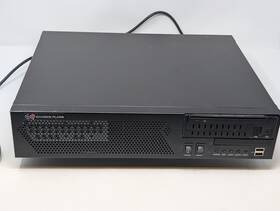
( Brand: Chassis Plans / Broadcast Microwave Services ), ( Manufacturer Part Number: E30CHASSIS ), ( Model: E30CHASSIS / RECEIVE SITE CONTROL SYSTEM ), ( Form Factor: 2u Industrial Desktop / Shelf-mount ), ( Type: Server Case ), ( Processor: Intel Pentium 4 Or Core 2 Duo ), ( Mount Type: Freestanding ), ( Connectivity: 3x Ethernet ), ( 6x Usb 2.0: 4 Rear, 2 Front, Vga ), ( Serial: Db9 ), ( Operating System: Windows Xp Professional ), ( Rack Unit Height: 2 U ), ( Country Of Origin: United States )
Review CHASSIS PLANS / BROADCAST MICROWAVE SERVICES Bms Rugged Industrial Pc E30 Site Control Win Xp Desktop
The **E30 Chassis Broadcast Microwave BMS (Baseband Modem System) with Rugged Control and Windows XP Desktop Integration** represents a high-performance, modular solution tailored for professional broadcast, microwave communication, and network infrastructure applications. Designed with durability and flexibility in mind, this chassis combines robust engineering with advanced functionality, making it ideal for environments where reliability and low-latency signal processing are critical. The **E30 chassis** features a **compact yet spacious** enclosure, optimized for housing high-density components such as **broadcast-grade microwave baseband modems, signal processors, and control interfaces**, all while maintaining efficient heat dissipation through precision-engineered ventilation and thermal management systems. Its **ruggedized construction** ensures resistance to vibration, dust, and temperature fluctuations, making it suitable for both indoor control rooms and outdoor field deployments where environmental conditions can be harsh.
At the heart of this system lies the **BMS (Baseband Modem System)**, engineered to deliver **high-fidelity digital signal processing** with support for **QAM, QPSK, and other modulation schemes**, ensuring seamless transmission of audio, video, and data streams over microwave links. The chassis accommodates **modular plug-and-play components**, allowing operators to scale performance by adding or swapping out **signal conditioning units, error correction modules, or encryption hardware** as needed. For control and monitoring, the **ruggedized Windows XP desktop interface** is integrated, providing a **user-friendly yet powerful** environment for real-time system management, diagnostics, and configuration adjustments. This legacy-compatible OS ensures backward compatibility with existing broadcast workflows while offering **customizable dashboards, log tracking, and automated failover protocols** to maintain operational continuity.
The **E30 chassis** is further enhanced by its **dedicated control architecture**, featuring **industrial-grade Ethernet, serial, and USB ports** for seamless connectivity with external devices, including **broadcast switches, encoders, and network management systems**. Its **low-latency design** minimizes signal degradation, making it perfect for live broadcast applications where timing precision is paramount. Additionally, the chassis supports **remote management via IP-based protocols**, enabling administrators to monitor and configure the system from anywhere, reducing downtime and improving efficiency. Whether deployed in a **news broadcast studio, sports venue, or long-haul microwave relay station**, this system delivers **uncompromising performance, scalability, and reliability**, ensuring that critical communication links remain stable under demanding conditions. Built for professionals who demand **precision, durability, and adaptability**, the **E30 Broadcast Microwave BMS Chassis** stands as a cornerstone for next-generation broadcast and network infrastructure.
### **Pros and Cons of Buying a Used Chassis-Based Microwave Broadcast System (BMS E30, E30 Chassis, Rugged E30, Control Win XP Desktop)**
#### **Overview**
This type of system typically refers to a **broadcast microwave transmission/reception chassis** (often from manufacturers like **Motorola, Harris, or other legacy vendors**) integrated with a **BMS (Broadcast Management System) E30 controller**, a **ruggedized E30 chassis**, and a **Windows XP-era desktop control unit**. These systems are commonly found in **TV broadcast, radio relay, or government/commercial microwave links** and may be sold used due to obsolescence, upgrades, or decommissioning.
---
### **Pros**
1. **Proven Reliability**
- Many of these systems were designed for **24/7 broadcast use**, meaning they have undergone rigorous testing and have a long track record of durability in harsh environments (outdoor enclosures, extreme temperatures, etc.).
- Components like **RF amplifiers, modulators, and demodulators** are often **military-grade or industrial-grade**, built to last decades with proper maintenance.
2. **Legacy Compatibility**
- If you re working with **older broadcast infrastructure** (e.g., analog or early digital TV standards like ATSC, DVB-T), these systems may still be **directly compatible** without needing costly upgrades.
- Some **government or military applications** still rely on these legacy systems, making them valuable for niche markets.
3. **Cost-Effective Alternative to New Equipment**
- New microwave transmission systems (especially from modern vendors like **Radwin, Cambium, or Viavi**) can cost **tens of thousands of dollars per link**. A used BMS E30 system may offer **similar performance at a fraction of the cost**.
- The **chassis-based modular design** allows for **repair or replacement of individual components** rather than buying an entire new unit.
4. **Ruggedized and Field-Proven**
- The **E30 chassis** is often **ruggedized for outdoor use**, meaning it can withstand **vibration, dust, moisture, and temperature extremes** better than many modern consumer-grade devices.
- Some units come with **redundant power supplies, fans, and cooling systems**, improving reliability in remote locations.
5. **Windows XP Control Interface (Potential Advantage for Some Users)**
- While **Windows XP is outdated and unsupported**, some users may still prefer its **stable, low-latency performance** for certain control applications, especially if they have **legacy software** that doesn t run on modern OS versions.
- The **desktop control unit** can be repurposed for **custom monitoring or automation scripts** if the hardware is still functional.
6. **Modular Upgrade Potential**
- Some BMS E30 systems allow **software upgrades** or **firmware patches**, though this depends on the vendor and how long they ve discontinued support.
- Certain **RF modules or transceivers** can be swapped out for newer models if they use **standard interfaces** (e.g., VHF/UHF, SHF bands).
7. **Resale or Trade-In Value**
- If the system is **well-maintained and still functional**, it may hold **some resale value** in the used broadcast equipment market.
- Some **government or military surplus auctions** sell similar equipment, which could be a source for acquiring one at a lower cost.
---
### **Cons**
1. **Obsolescence and Lack of Support**
- **Windows XP is no longer supported** by Microsoft, meaning **no security patches, driver updates, or compatibility with modern software**.
- The **BMS E30 software** may be **discontinued**, with no official vendor support for troubleshooting or upgrades.
- **Hardware components** (e.g., RF chips, processors) may be **difficult to replace** if they fail, as manufacturers no longer produce them.
2. **High Maintenance and Repair Challenges**
- Finding **qualified technicians** who understand these legacy systems is **increasingly difficult**, as younger engineers often lack experience with them.
- **Spare parts** (e.g., specific RF modules, power supplies, or control boards) may be **expensive or unavailable**, forcing buyers to **source from obsolete stock**.
- **Diagnostic tools** for these systems are often **proprietary and outdated**, making troubleshooting time-consuming.
3. **Compatibility Issues with Modern Networks**
- If you need to **integrate with IP-based networks, modern SDRs (Software-Defined Radios), or cloud monitoring**, these systems may **lack necessary interfaces** (e.g., Ethernet, TCP/IP, or modern API support).
- **Encryption and security protocols** (e.g., AES, modern authentication) may not be supported, making them vulnerable to **cybersecurity risks** if used in sensitive applications.
4. **Limited Scalability**
- Modern microwave systems often support **higher data rates (multi-Gbps), wider bandwidths, and advanced modulation schemes (e.g., 256-QAM, OFDM)**. Older BMS E30 systems may be **limited to lower throughput**.
- **Expansion options** (e.g., adding more channels or increasing capacity) may be **restricted by hardware limitations**.
5. **Environmental and Regulatory Risks**
- **Lead, cadmium, and other hazardous materials** may be present in older electronics, requiring **proper disposal or refurbishment** if the system is no longer needed.
- **Frequency allocation changes** could render the system **illegal to operate** in certain bands if regulations shift (e.g., spectrum repurposing for 5G or other uses).
- **Emission standards (FCC, CE, ITU)** may no longer be met without **costly modifications**.
6. **Software and Firmware Limitations**
- The **control software** may be **clunky, slow, or incompatible** with modern displays or input devices.
- **No cloud or remote management** options monitoring and control are typically **local-only**, which can be a drawback for distributed networks.
- **Backup and recovery options** may be minimal, increasing the risk of data loss if the system fails.
7. **Hidden Costs of Ownership**
- **Power consumption** may be higher than modern, energy-efficient systems, leading to **increased operational costs**.
- **Cooling requirements** (if the system uses older fans or heat sinks) may necessitate **additional infrastructure** in hot or dusty environments.
- **Transport and installation** can be **more complex** due to the **bulk and weight** of chassis-based systems compared to modern compact units.
8. **Training and Knowledge Gap**
- **Onboarding new staff** to operate these systems requires **extensive training**, which may not be feasible for smaller organizations.
- **Documentation is often scarce or outdated**, making troubleshooting **more difficult** without deep historical knowledge.
---
### **Conclusion**
Buying a **used BMS E30 chassis-based microwave broadcast system with a Windows XP control desktop** can be a **cost-effective solution** if:- You **already have a legacy network** that requires compatibility with this system.
- You **have the technical expertise** (or access to it) to maintain and repair the equipment.
- The system **meets your current bandwidth and reliability needs**, and you **don t require modern scalability or security features**.
- You **plan to use it in a controlled environment** where obsolescence is less of a concern (e.g., a museum, educational facility, or niche broadcast application).
However, if you are looking for a **long-term, future-proof, or high-performance solution**, this purchase carries **significant risks**, including:- **Increased maintenance costs** due to parts scarcity and lack of support.
- **Security vulnerabilities** from outdated software.
- **Compatibility issues** with modern networking and monitoring tools.
- **Potential regulatory or operational risks** from using obsolete hardware.
---
### **Recommendation**
1. **Assess Your Needs Carefully**
- If you **must** use this system because of **existing infrastructure dependencies**, proceed with a **detailed inspection** and **cost-benefit analysis**.
- If you re **starting a new project**, consider **modern alternatives** (e.g., **Cambium Networks, Radwin, or Viavi solutions**) that offer **better performance, security, and support**.
2. **Inspect Thoroughly Before Purchase**
- **Test all RF components** (transmitters, receivers, amplifiers) for **signal integrity and power output**.
- **Verify the Windows XP desktop** does it boot? Are all drivers functional? Can it connect to the BMS E30?
- **Check for physical damage** (corrosion, failed fans, loose connections) and **test cooling systems**.
- **Review maintenance logs** if available how often were components replaced?
3. **Budget for Hidden Costs**
- Account for **spare parts inventory** (even if minimal).
- Plan for **training or hiring a specialist** if in-house expertise is lacking.
- Consider **backups and redundancy** (e.g., a secondary control unit) to mitigate downtime.
4. **Explore Hybrid Solutions**
- If possible, **integrate the legacy system with modern monitoring tools** (e.g., **SNMP, REST APIs, or cloud dashboards**) to improve observability.
- Use **modern SDRs or software-defined radios** alongside the BMS E30 for
Details:
Ships from Vision Island, WA. Front Access: Includes front-mounted USB ports and a physical power toggle. Highlights for Buyers: Industrial Durability: Heavy-duty steel construction with high-airflow cooling fans. While I have confirmed the unit powers on, no further software testing or hardware bench marking has been performed.
Originally utilized as a Receive Site Control system for high-end Broadcast applications, this unit is built to much higher standard than consumer hardware. Please see photos for the exact port configuration. This is an ideal platform for legacy industrial software or a robust retro-gaming sleeper build. Power cord is NOT included.
High Connectivity: Features triple LAN ports and physical Serial/PS/2 for compatibility with older hardware networking needs.
part #: e30chassis prices
- $25.00-$69.98
specifications rackmountcasee:
- brand: Chassis Plans / Broadcast Microwave Services
- mpn: E30chassis
- model: E30chassis / Receive Site Control System
- form factor: 2u Industrial Desktop / Shelf-mount
- type: Server Case
- processor: Intel Pentium 4 Or Core 2 Duo
- mount type: Freestanding
- connectivity: 3x Ethernet
- 6x usb 2.0: 4 Rear, 2 Front, Vga
- serial: Db9
- operating system: Windows Xp Professional
- rack unit height: 2 U
- country of origin: United States
payments rackmountcasee:
- other
- wallet: Google-pay
- credit card: Diners-club
general rackmountcasee:
- Enterprise Networking, Servers > Racks, Chassis Patch Panels > Rackmount Cases Chassis
- condition: For parts or not working
shipping rackmountcasee:
- service: FedEx Ground / FedEx Home Delivery
- class: Standard
- type: Fixed
- carrier: FedEx
- transit: 5-10 Days
- cost: $50.00
seller rackmountcasee:
- # reviews: 1917
- rating: 100.0%
- city: Vashon, Washington
offer rackmountcasee:
- options: Ship-to-home
- availability: In Stock
- quantity: 1
- best offers: True
- sold: 0
- started: February 21, 2026
returns rackmountcasee:
- policy: No Returns
Chassis Plans / Broadcast Microwave Services E30CHASSIS Is Similar To:
- Asr1006 Cisco Chassis Asr Series Aggregation Services Router Dml (32.6% similar) Test notes available upon request. Includes: 1x ASR1006 Chassis only condition these items are in good. We buy juniper, Cisco, extreme, foundry, brocade, dell, 3COM and more. If we haven't, please let us know. For sale is a Cisco ASR1006 Chassis As 1000 series aggregation Services router ml. Those ...(September 18th, 2018)
- Chas-bp-mx960-s-a Juniper Networks Spare Chassis With Fans Psus Control Panel (27.2% similar) APO FPO is smart-post ed...(January 16th, 2019)
- Ckc-g2-cr Chassis Plans 1u Keyboard (25.5% similar) This is a Chassis Plans CKC-G2-CR 1u keyboard rack mount drawer w touch pad PS 2 condition: new other, opened box...(June 20th, 2017)
- Cpr-27201-1ud Chassis Plans Rackmount Keyboard (28.8% similar) 1 Taft LCD display with USCG 1600X1200 resolution used in industrial, commercial, military, or Broadcast applications offers 250 nit brightness, 500:1 contrast, and 89 degree viewing angle for exceptional view ability anti-glare hard coating minimizes reflections making images clearer aspect ratio ...(September 27th, 2017)
- D-414l-7 Istarusa Case Rackmount Industrial Pc Chassis Retail 846813019330 (34% similar) Estrus case D-414L-7 rack mount 4u 14SLOTS industrial pc Chassis retail the computing D-414L-7, with 14 slot back plane support all size standard add-on cards. Ideal solution for telecommunication, industrial automation, control system, and data requisition application. 5 drive internal: drives: 1 D...(May 15th, 2018)
- Mps-1914 1715 Microwave Photonic Anton Bauer Rack Chassis Rf To Fiber Optic (34.9% similar) The unit provides user with status monitoring through use of an onboard processor that communicates to a host computer over RS-232 I o interface. The transmitter operates over link distances up to 50 km. The bolt head locks into hex milled pocket so that you can tighten nylon nut while clamp is ...(April 25th, 2018)
- Gh-432sr Guanghsing Industrial Slot Cpu Server Rack Chassis Case (32.6% similar) Please send your vat id together with the declaration that you are buying for commercial purposes via message and wait response before pay. Satisfied costumers are ours top priority and negative reviews don't solve any problems. 5 FD 2x minor differences in appearance which don't affect the function...(May 2nd, 2021)
- Intel Bkcmcr1abc Nuc Rugged Chassis Element New Sealed (32.9% similar) The NYC is a tiny computing device with the power of advanced processor. Intel NYC rugged Chassis element - BKCMCR1ABC, brand new: factory sealed!, no more compromising between performance, profile, and value. Audio output. Product form factor. Its lower power consumption enables innovative system ...(September 22nd, 2023)
- In Win 827955020927 In-win Iw-rf100s-s265 1u Short Depth Mini-itx Rackmount Server Chassis 265w (8.6% similar) In-win IW-RF100S-S265 1u short depth mini-IT rack mount server Chassis, 265W cosmetic condition excellent functionality tested. Product info items included: as you can see from the pictures. 100% satisfaction. Liquid, misuse, accidental damage is also not covered...(August 22nd, 2024)
- In-win 445044930907 In-win Iw-rf100s-s265 1u Short Depth Mini-itx Rackmount Server Chassis 265w (8.6% similar) Tool-free drive for 2x 2.5 HDD, 3.5 HDD. Includes 265W 80 bronze flex power supply. Supports 3x 40X28MM cooling fans. 1u rack mount Chassis only supports mini-IT motherboards...(November 29th, 2024)
- Portwell Rpc-500nc Industrial 4u Rackmount Computer Chassis (30.1% similar) Multiple item listings. Port well RPC-500NC industrial 4u rack mount computer Chassis S416B. This item is to be installed and maintained by qualified individuals...(January 2nd, 2025)